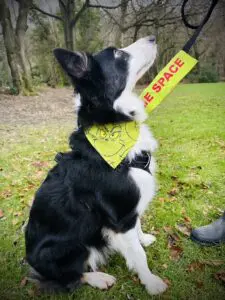
The Appeasement Grin: What Your Puppy is Really Trying to Tell You
There are few things quite as adorable as a puppy who looks up at you, pulls their lips back, shows all their tiny teeth and appears to give you a huge, goofy smile.
It is very tempting to think: Look at that happy puppy!
But sometimes, that isn’t quite what is happening.
What you’re seeing may be an appeasement or submissive grin, an interesting piece of canine body language that tells us a lot about how our puppy is feeling.
Understanding these little signals is one of the best things we can do as puppy owners. Because when we learn to listen to what our dogs are telling us, we can help them feel safer, more confident and better able to navigate the human world they have found themselves living in.
So, what is an appeasement grin?
An appeasement grin is a social behaviour that some dogs display when they are feeling uncertain, worried or keen to avoid conflict.
The puppy pulls the corners of their mouth backwards, often exposing their front teeth. They may squint their eyes, flatten their ears, lower their body or wag their tail.
A puppy who is loose, wiggly and relaxed, approaching you voluntarily with soft body language, is giving you very different information from a puppy who is crouching, turning their head away, licking their lips and flashing their teeth while someone reaches over them.
The second puppy may be saying:
“I’m not sure about this. Please don’t be mad with me.”
That distinction matters.
Why do puppies do it?
Dogs are incredibly social animals. They have evolved a whole repertoire of behaviours that help them communicate with one another and avoid unnecessary conflict.
An appeasement grin is part of that communication.
Your puppy may use it because they are unsure what is expected of them, overwhelmed by a situation, excited but slightly uncomfortable, or trying to communicate that they mean no harm.
You might see it when:
- You come home and greet them enthusiastically.
- Someone bends over them or reaches towards their face.
- They are being told off.
- They are meeting someone new.
- They are unsure about being handled.
- They are feeling overwhelmed.
The important thing is not to assume that the puppy is being “cheeky” or “guilty”.
Dogs don’t need us to punish them for communicating discomfort. They need us to listen.
How can we help our puppy feel more comfortable?
The first step is wonderfully simple:
Give them a little more choice.
If your puppy grins when someone approaches, don’t immediately reach for them. Pause. Turn slightly sideways. Let your puppy decide whether they want to come closer.
If they move towards you, you can calmly reward that choice.
If they move away, let them.
This teaches your puppy something incredibly valuable:
“My people listen when I say I’m uncomfortable.”
We can also make potentially worrying situations much easier by pairing them with things our puppy loves.
For example, if your puppy is uncertain about having their paws handled, we don’t need to hold their paw tightly and insist that they tolerate it.
Instead:
- Touch the shoulder.
- Give a treat.
- Stop.
- Repeat.
- Gradually work towards touching the leg.
- Eventually touch the paw.
- Reward throughout.
We are teaching the puppy that handling predicts good things, while allowing them to remain below the point where they become overwhelmed.
That is how confidence is built.
Not by forcing a puppy to “get used to it”, but by showing them that the world is safe and predictable.
By rewarding our puppies for doing what we want them to, rather than punishing them for what we don’t want them to, we help our puppies understand what is expected of them without them becoming nervous around us.
But doesn’t positive reinforcement mean there are no boundaries?
This is one of the biggest misconceptions I hear from owners. Positive reinforcement does not mean allowing your puppy to do whatever they want. In fact, good reward-based training gives puppies wonderfully clear boundaries. The difference is how we teach those boundaries.
Imagine your puppy jumps up at the kitchen worktop. We could shout “NO!”, push them away or physically correct them. Or we can teach them what to do instead.
- Perhaps four paws on the floor earns a treat.
- Perhaps going to their bed earns a chew.
- Perhaps sitting politely makes the cupboard containing their dinner open.
Now your puppy understands the rules: This behaviour works. That behaviour doesn’t. And they have been given the information they need to succeed. Positive reinforcement is about making the behaviours we want valuable to our dogs.
We can also use management and sensible boundaries. Baby gates, puppy pens, keeping tempting objects out of reach and controlling access to certain areas are not failures of training. They are part of good puppy raising. After all, we wouldn’t leave a toddler alone beside a plate of biscuits and then be surprised when the biscuits disappear!
Clear doesn’t have to mean scary
Dogs don’t need to be frightened of us in order to listen to us.
They need to understand what behaviour earns rewards, what behaviour doesn’t, and what is expected in different situations.
A puppy can learn:
- We don’t jump on people.
- We chew our own toys.
- We wait at doors.
- We come when called.
- We settle on our bed.
- We walk nicely on the lead.
- We leave things when asked.
- We can cope when our humans are busy.
And we can teach all of these things without making our puppy afraid of getting something wrong. That is an important distinction.
We want our dogs to think:
“What can I do to make this work?”
Not:
“How do I avoid getting into trouble?”
Why does positive reinforcement make sense from a dog psychology perspective?
Positive reinforcement isn’t simply a kinder way of training. It makes sense because it works with the way animals learn. Behaviour that produces a consequence the animal values is more likely to happen again.
If your puppy sits and immediately gets a treat, plays a game or gets access to something they want, sitting becomes useful.
Your puppy learns:
“When I do this, good things happen.”
That is powerful learning.
The reward doesn’t have to be food either. Depending on the individual dog, reinforcement might be play, access to the garden, sniffing, a toy, attention, or the opportunity to greet someone. The important thing is that your dog finds it rewarding.
Good training therefore becomes a conversation between you and your puppy.
You show them which behaviour works.
They show you what motivates them.
Together, you build a reliable repertoire of skills that makes everyday life easier.
What about “balanced” or aversive training?
This is where the science becomes particularly important.
Aversive methods include techniques designed to make unwanted behaviour uncomfortable or unpleasant, such as physical corrections, leash jerks, shouting, shock collars or other forms of punishment.
There is an important distinction here: stopping a behaviour is not necessarily the same thing as teaching a better behaviour.
A puppy who stops jumping because their owner shouts may simply have learned that jumping around that particular person is risky. They haven’t necessarily learned how to greet people politely.
Reward-based training gives us an opportunity to teach the behaviour we actually want.
The American Veterinary Society of Animal Behavior (AVSAB) recommends reward-based methods for all canine training and behaviour modification and advises against aversive methods. Its review of the evidence highlights associations between aversive training and increased stress, fear and risks to the human-dog relationship (AVSAB).
Research has also found differences in stress-related behaviour and physiological measures between dogs trained with reward-based and aversive methods, while studies have not demonstrated a need for aversive methods to achieve effective training (AVSAB).
This matters particularly with puppies. A puppy is still learning what the world is.
Every interaction is an opportunity to teach them:
“People are safe.”
“I can work things out.”
“My choices matter.”
“When I try something, my human helps me.”
Those are wonderful foundations for a confident adult dog. A dog who won’t go on to develop behaviour problems such as reactivity.
Training isn’t about controlling your dog. It’s about teaching them how to live successfully in our world.
This is perhaps the most important shift in mindset. Our puppies haven’t arrived knowing that sofas are for sitting with us rather than chewing. They don’t know that the postman is not an exciting visitor. They don’t understand that the children’s toys aren’t theirs. They don’t automatically know that pulling towards another dog isn’t going to get them there faster. And they certainly don’t know why we don’t want them eating the contents of the bin.
They aren’t being difficult. They’re learning. Our job is to make that learning as clear as possible.
That means rewarding the behaviours we like, preventing opportunities for unwanted behaviour where we can, and giving our puppy appropriate alternatives.
It also means remembering that behaviour is communication.
Your puppy-to-confident-dog checklist
If you want your puppy to grow into a happy, confident dog who fits comfortably into your family life, start with these simple foundations.
1. Reward what you want to see
Don’t wait until your puppy does something wrong. Catch them doing something right.
Settled quietly beside you? Reward it.
Four paws on the floor when someone arrives? Reward it.
Looked at another dog and then back at you? Reward it.
Choosing their own toy instead of your shoes? Definitely reward it!
The behaviours we consistently reinforce are the behaviours we are most likely to see again.
2. Teach your puppy what to do, rather than only what not to do
Instead of repeatedly saying “don’t jump”, teach: “Four paws on the floor to say hello.”
Instead of “don’t pull”, teach: “Walking beside me makes good things happen.”
Instead of “don’t steal that”, teach: “Drop it and I’ll give you something even better.”
Make the right choice easy and worthwhile.
3. Socialise thoughtfully
Socialisation isn’t about making your puppy greet every person and dog they see. It is about helping them experience the world positively.
- Different surfaces.
- Sounds.
- People.
- Dogs.
- Cars.
- Traffic.
- Handling.
- Veterinary visits.
- Being left alone for short periods.
- New places.
The aim isn’t to overwhelm your puppy with experiences. It is to help them learn that new things are safe and manageable. Early socialisation and positive training are important foundations for preventing behaviour problems and supporting confidence.
4. Learn your puppy’s body language
Look beyond the wagging tail. Watch their ears, eyes, mouth, posture and movement. Learn what your puppy looks like when they are relaxed. Learn what they look like when they are worried.
Learn their early signs of stress, before they need to escalate their communication.
That appeasement grin may be one of those signs.
5. Give them plenty of sleep
Puppies need a lot of sleep. An overtired puppy can look like a completely different puppy.
- Zooming.
- Biting.
- Jumping.
- Demanding attention.
- Unable to settle.
Sometimes the best training plan is simply: quiet room + comfy bed + nap.
6. Give them appropriate outlets
Dogs need more than physical exercise.
Give your puppy opportunities to sniff, explore, chew, forage, play and problem-solve.
These activities allow them to use behaviours that come naturally to dogs and can make everyday life much more fulfilling.
7. Practise being calm
We often spend lots of time teaching puppies to be active.
Sit!
Come!
Fetch!
Play!
But learning to switch off is just as important.
Reward your puppy for relaxing. Give them a chew on their bed. Let them watch the world from a safe distance. Teach them that doing nothing can be wonderful too.
8. Don’t punish communication
If your puppy growls, freezes, hides, turns away or shows an appeasement grin, listen.
Don’t punish the warning.
Instead, ask yourself:
“What is my puppy trying to tell me?”
Then change the situation so they feel safer.
Suppressing communication doesn’t necessarily remove the underlying emotion. It can simply make the warning harder for us to see.
9. Be consistent, not scary
Everyone in the household should know the basic rules.
If jumping is not allowed, everyone should reinforce four paws on the floor.
If the puppy isn’t allowed on the sofa, everyone should follow the same rule.
Consistency makes life predictable. Predictable environments help puppies learn.
10. Remember that your puppy is not a finished dog
There will be accidents. There will be chewed shoes. There will be days when recall mysteriously disappears. There will be moments when you wonder whether your puppy has ever heard the word “sit” in their entire life. That’s puppyhood. Don’t measure your success by whether your puppy is perfect. Measure it by whether they are learning, whether they feel safe, and whether your relationship is getting stronger. Ultimately, that’s what we’re trying to create. Not a dog who behaves perfectly because they are afraid of getting it wrong.
A dog who wants to work with us.
A dog who trusts us.
A dog who knows how to make good choices.
A dog who can cope when life doesn’t go exactly to plan.
And a dog who feels safe enough to show us when they need help.
That is what a happy, confident family dog looks like and it starts with listening to the tiny puppy in front of us.